The Plan Tool: Designing Trust into the Remediation Process
I designed the tool Klaudia (our AI SRE) uses once an investigation has found a root cause and remediation allows more than one action. Instead of the user manually working out and running each of those, Plan takes the RCA's findings and orchestrates the sequence itself.
Context
Klaudia is Komodor's AI assistant, originally built to investigate Kubernetes issues and recommend — and apply — fixes. As it grew more capable — applying patches, creating Git changes, opening Jira tickets — those capabilities shipped as separate tools, each with its own UI and logic. What made sense technically didn't make sense as a user experience. My work turned Klaudia's individual capabilities into one coherent interaction model for how it takes action.
The problem
Remediation after an RCA is rarely a single action. A root cause might call for a patch, a Git action, and a Jira ticket together — but the product had no way to propose that as one coherent set. It could only offer one tool at a time. Early on, actions were mapped directly to capabilities: Patch, Git, Jira — each its own tool, easy to follow when only one action was available.
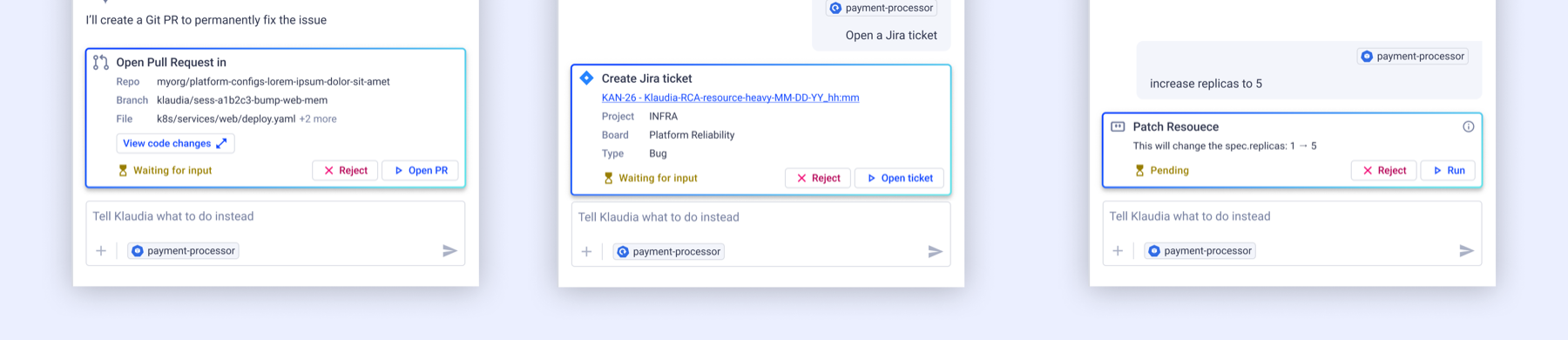
The main pain point was that we were exposing implementation, not intent. It was becoming apparent that a mediator was needed to help users express their needs — the complexity of the agent shouldn't become complexity for the user.
Outcome
- Properly structured the remediation flow with one unified, multi-select remediation proposal, gated on explicit user approval.
- Kept a genuinely free "deeper investigation" (pricier model) option available without letting it compete visually with primary remediation actions.
Key stages
Separating decision from execution
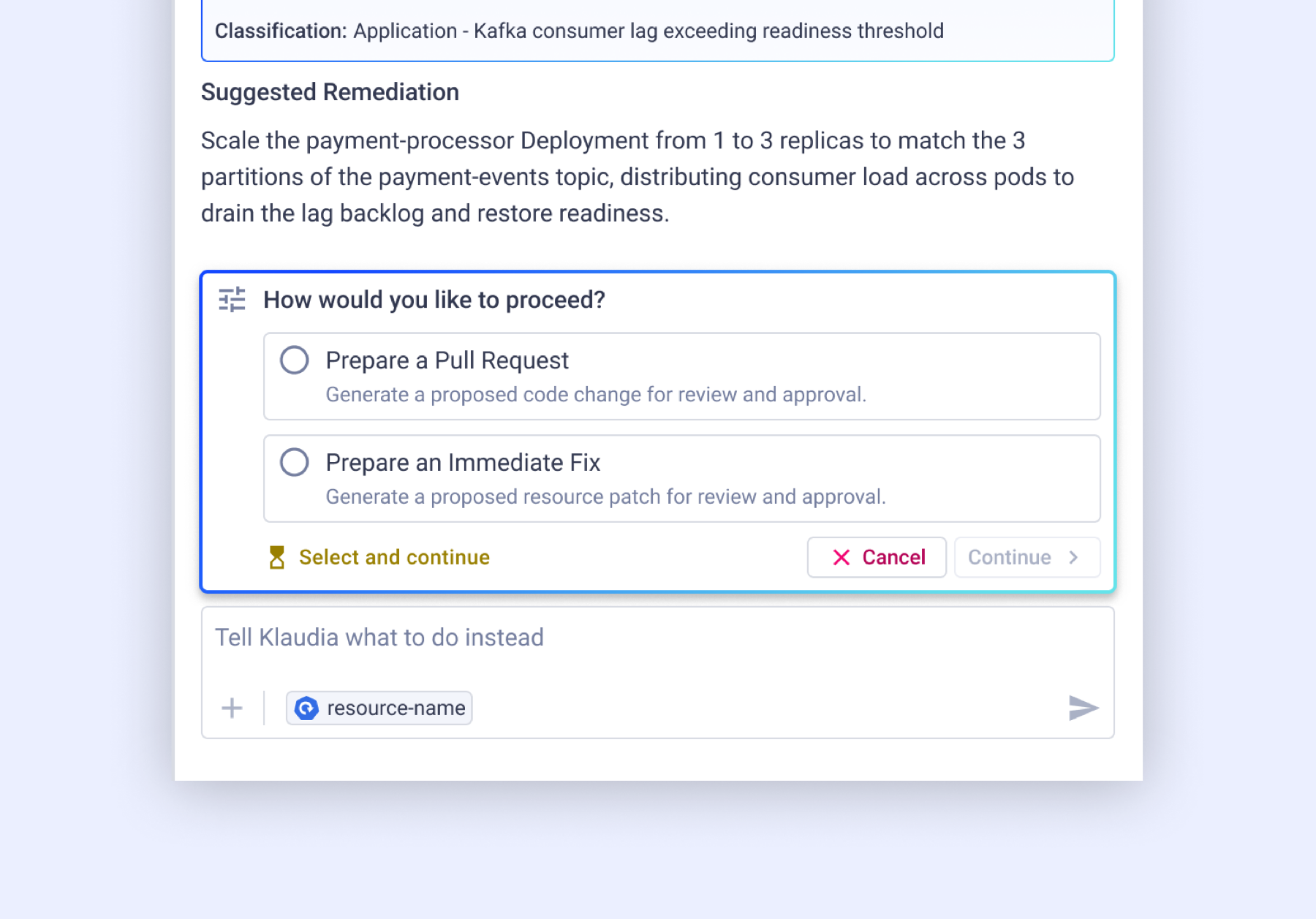
Instead of surfacing tools independently, Klaudia began presenting remediation paths together — "apply the fix," "open a Git change," "file a ticket" — so users chose an outcome, not a mechanism.
Handling the deeper-investigation path without a paywall
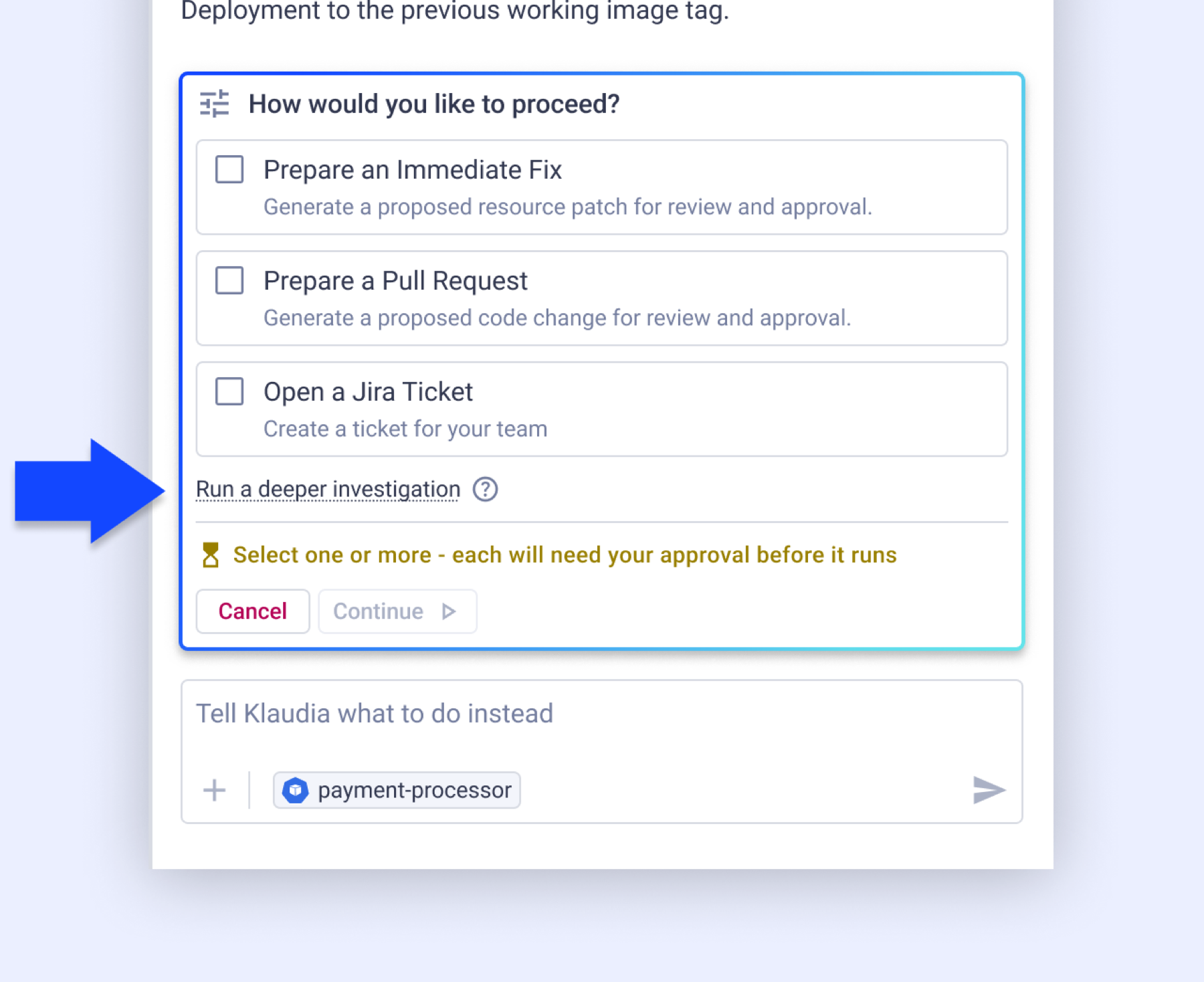
Behind the scenes, an additional capability was developed: deeper investigation. Klaudia's default investigations ran on a cheaper model. While we were confident in the AI's responses, we wanted to let users, should they choose to, run a deeper investigation using the original model.
Final design
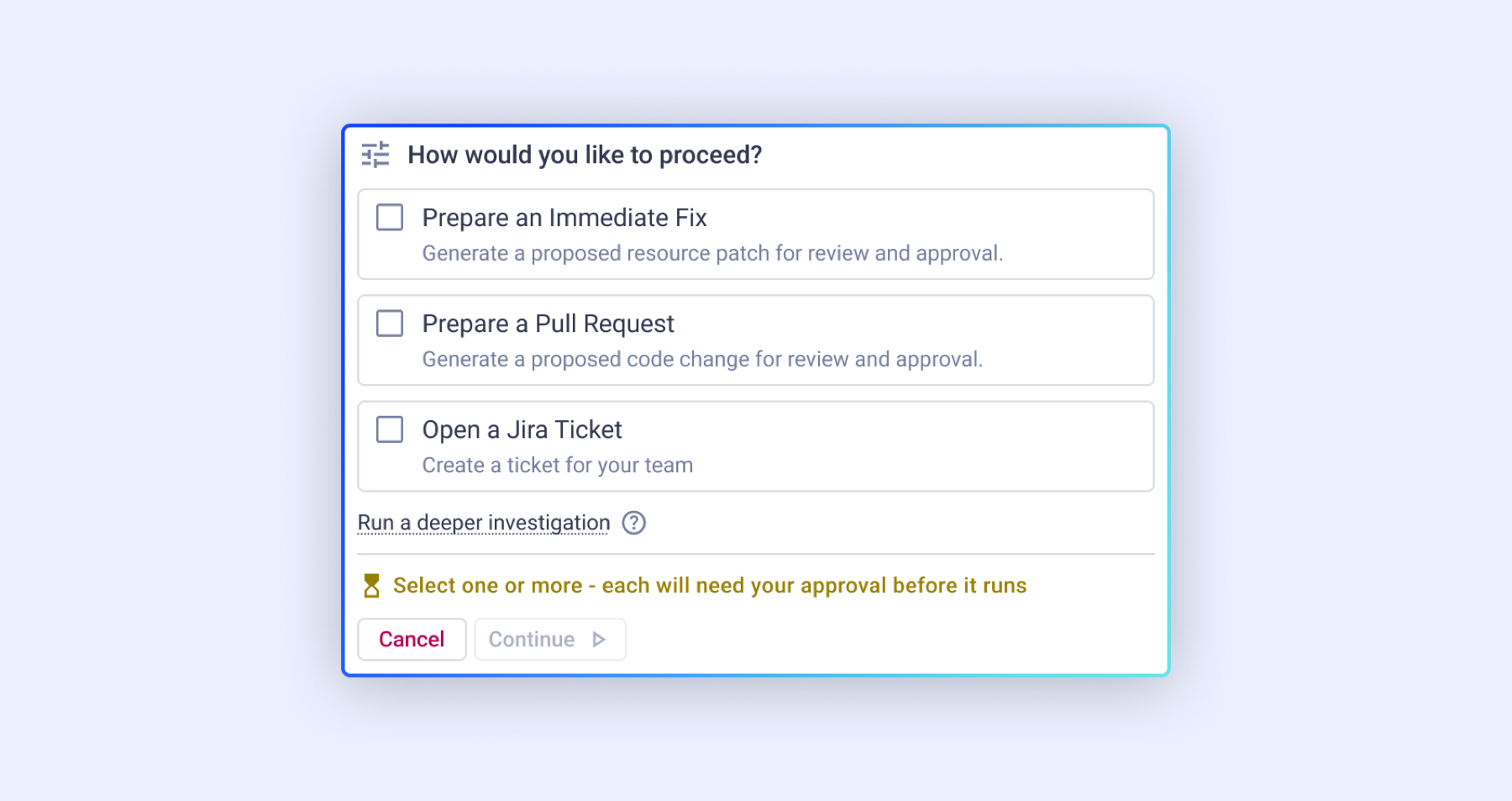
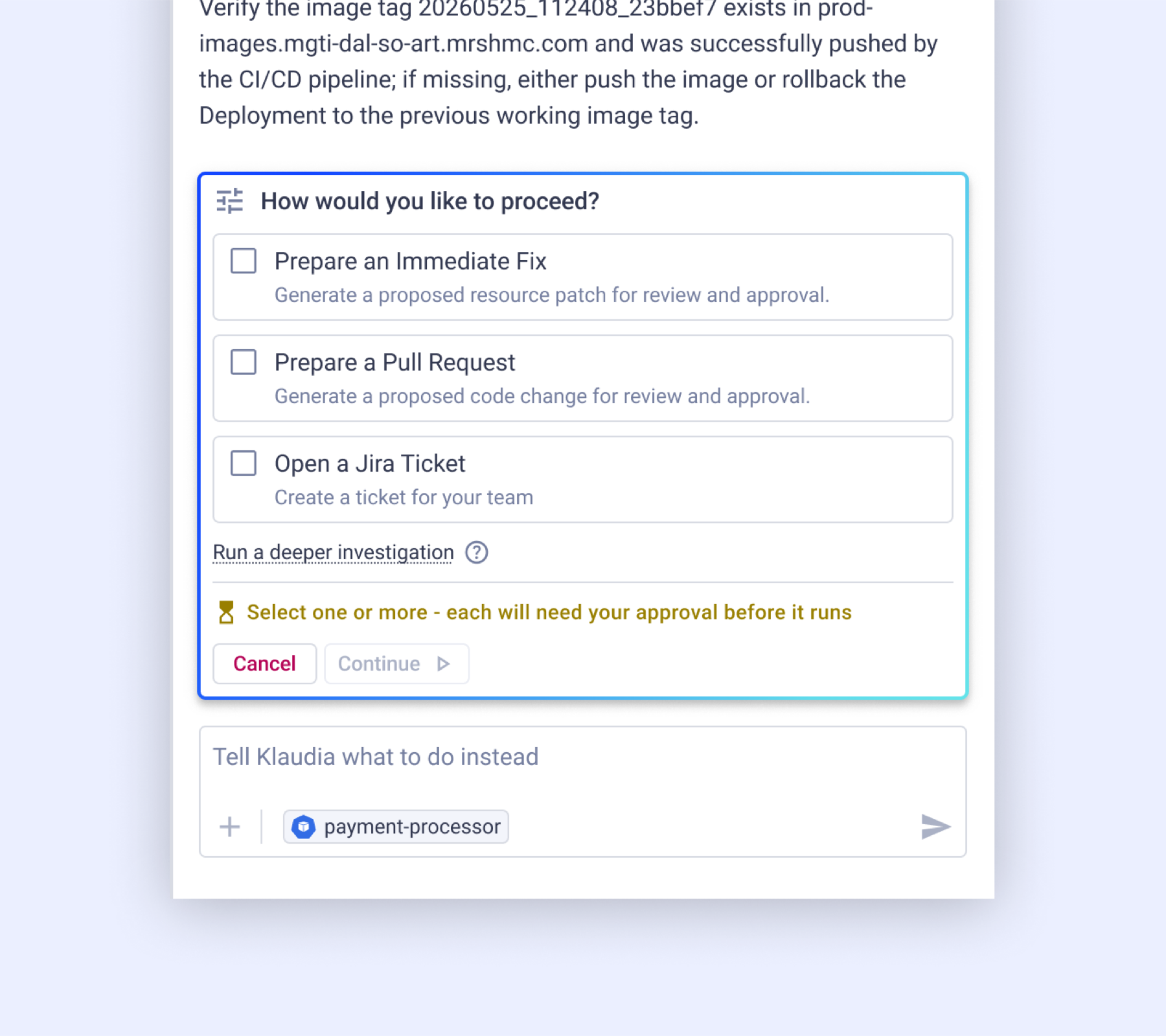
I designed Plan to surface all relevant remediation options together. Once an RCA identifies an issue — prepare an immediate fix, prepare a pull request (a permanent fix), open a Jira ticket — they appear as a multi-select checklist rather than a single choice. The user is free to select one or several, and each option carries an explicit note that it still needs their approval before it runs.
The shipped experience is built around three principles:
- Proposal, not execution. Plan surfaces what Klaudia recommends as remediation; it never runs an action without the user checking the box and confirming approval.
- One coherent set, not separate tools. Immediate Fix, Pull Request, and Jira Ticket are presented together as one multi-select response to the RCA's finding, not as three things the user has to seek out individually.
- Cost-aware visual hierarchy. The deeper-investigation option is real, free, and available — but its lighter, link-style treatment keeps it from competing for attention, proportionate to when it's actually needed.
Impact
Plan significantly reduced the cognitive load of turning an RCA's findings into a fix. Users are told all of their options and are able to make a properly conscious decision.
Visually deprioritizing the deeper-investigation option kept usage of the pricier model in check while keeping the capability genuinely available and free.
Because new remediation actions can be added as building blocks inside a plan, the design also stayed durable as Klaudia's capabilities kept growing — new actions don't require users to learn a new tool each time.